Guide › ADU requirements
7 CFR 3555.10USDA ADU requirements, line by line
The final rule adds formal definitions of an "Accessory Dwelling Unit" and a "Living Unit" to the Guaranteed Loan regulations. Here's what a space needs to qualify, and the questions the rule leaves open.
What a living unit must have
The rule adds two definitions to 7 CFR 3555.10, the definitions section of the Single Family Housing Guaranteed Loan regulations: Accessory Dwelling Unit and Living Unit. The living unit definition is the practical test, because it spells out the basic features a space needs before it counts as a place someone can live.
Under the rule, a living unit needs all six of these:
- Potable water. Safe, drinkable water supplied to the unit.
- Sanitary facilities. A working way to handle wastewater.
- Heating. A source of heat for the unit.
- Electricity. Electrical service to the unit.
- At least one bathroom.
- A kitchen or a kitchenette.
All six matter. A finished space with a bathroom but no cooking area wouldn't meet the kitchen or kitchenette requirement. A converted shed with electricity but no water or bathroom wouldn't either. How lenders and appraisers verify each item will depend on USDA's guidance and their own processes.
Why definitions matter: before this rule, the regulations didn't define these terms. A shared written standard means buyers, sellers, agents, lenders and appraisers can all check a property against the same list.
Spaces that may or may not fit
"ADU" is a broad term. People use it for detached cottages, garage apartments, basement suites, in-law units and tiny homes. Whether a particular space qualifies comes down to the living unit features above, not what it's called.
Likely to fit the definition
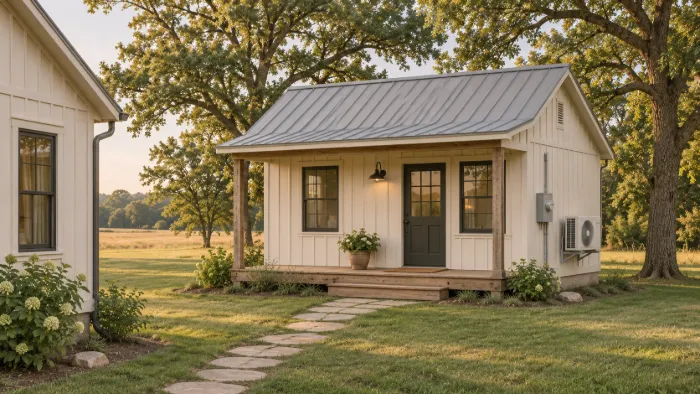
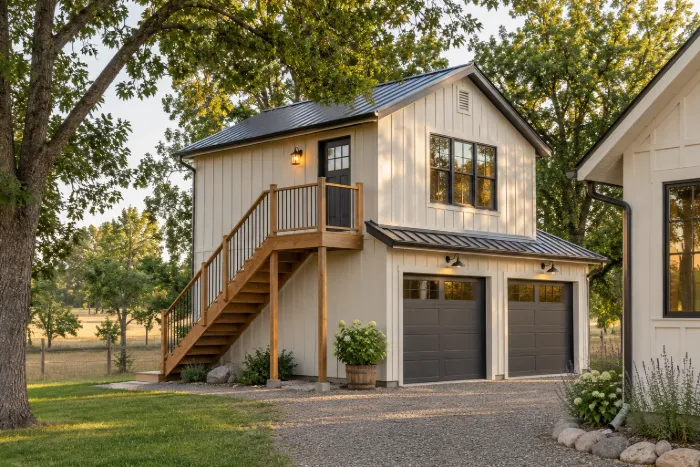
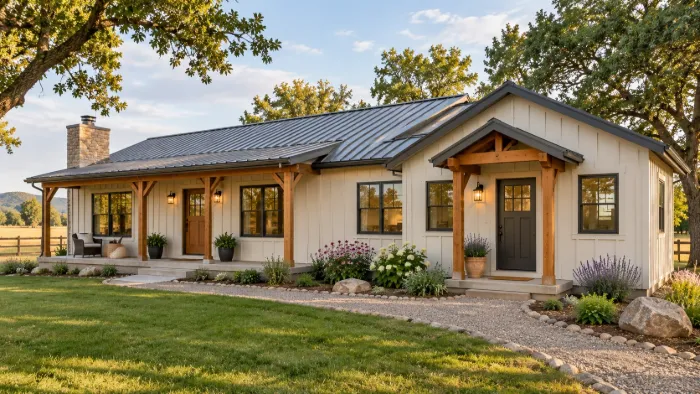
A detached guest house, an apartment over a garage, or an attached in-law suite that has its own water, sanitary facilities, heat, electricity, bathroom and kitchen or kitchenette. These are the spaces the rule seems designed for.
Worth checking carefully
A basement suite with a wet bar but no real cooking setup, a converted garage that shares utilities in ways that aren't clear, or a unit whose heat or water comes from the main house. These may still qualify, but they're where questions are most likely to come up. Ask your lender early.
Unlikely to count as a living unit
A bonus room, a home office, a workshop or a storage building without a bathroom and kitchen or kitchenette. These can be perfectly good features of a home. They just aren't separate living units under the rule.
Income-producing ADUs are now allowed
The headline change is that the Guaranteed Loan Program can finance a single-family home with one or more income-producing ADUs, starting December 28, 2026.
Under the old rules, a home was ineligible if its ADU had produced rental income, even if the new buyer had no plans to rent it. That ruled out many homes that would otherwise have fit the program, just because of how a previous owner used the space. The new rule ends that restriction.
One important detail is still missing: how ADU rental income counts toward qualifying for the loan. USDA hasn't published that guidance yet. Until it does, don't count on ADU rent to help you qualify.
Home-based business features
The rule also clarifies that homes with features for home-based businesses, such as childcare, product sales or crafts, can remain eligible, as long as those features don't require commercial real estate features.
This matters in rural areas, where running a small business from home is common. A home that supports a daycare, a craft studio or a small product business is still a home. A property that depends on commercial real estate features to support the business falls outside that line.
What the rule doesn't answer yet
| Question | Status |
|---|---|
| How ADU rental income counts toward qualifying | Awaiting guidance |
| Whether the loan can fund building a new ADU | Not yet known |
| When lenders will start offering it | Not yet known |
| Whether the direct loan program changes | Not described |
We'll update this page when USDA publishes guidance. See dated updates →
Before you make an offer on a home with an ADU
- Walk the ADU and confirm each living unit feature: water, sanitary facilities, heat, electricity, bathroom, kitchen or kitchenette.
- Check the property address on USDA's official eligibility map.
- Ask the seller how the ADU has been used, including whether it has been rented.
- Talk to a USDA-approved lender about timing, since the rule takes effect December 28, 2026.
- Don't rely on ADU rent to qualify until USDA guidance says how it counts.
ADU requirement questions
What does USDA require for an ADU to count as a living unit?
Under the 2026 rule, a living unit needs potable water, sanitary facilities, heating, electricity, at least one bathroom, and a kitchen or kitchenette.
Where are the USDA ADU definitions?
The rule adds definitions of "Accessory Dwelling Unit" and "Living Unit" to 7 CFR 3555.10, the definitions section of the Single Family Housing Guaranteed Loan regulations.
Can a home have more than one ADU?
The rule allows financing a single-family home with one or more income-producing ADUs.
Does a kitchenette count, or does it need a full kitchen?
The rule's living unit definition requires a kitchen or a kitchenette, so a kitchenette can meet that part of the test.
Can I run a business from a USDA-financed home?
Homes with home-based business features, like childcare, product sales or crafts, can remain eligible if they don't require commercial real estate features.
Get notified when lenders start offering it
The rule takes effect December 28, 2026, but lenders still need USDA's handbook guidance before they can offer it. Leave your first name and email and we'll send one short note when that changes. Nothing else.
Just your first name and email. We never ask for income, phone or loan details. See our privacy policy.